
Three dumpsters, two cousins who stopped speaking, and a closing date that slipped twice. If you’ve inherited or own a hoarder house in North Carolina, you’re likely looking at a full house and no plan yet. You’ve got more paths open than it seems, and a few of them never ask you to touch a single box.
What Is a Hoarder House and Why Is It So Hard to Sell in North Carolina?
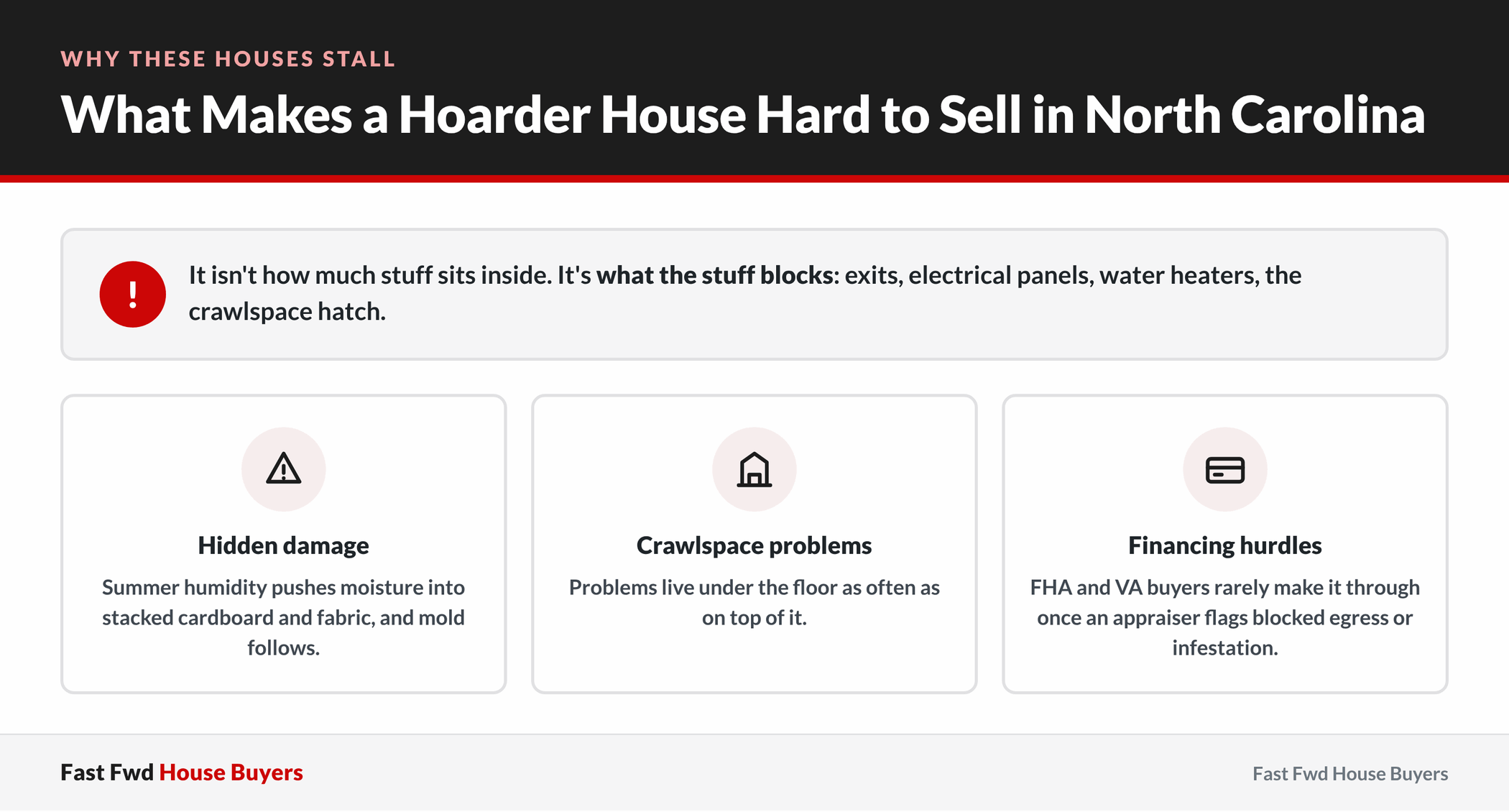
The amount of stuff inside isn’t what matters most. What matters is what it covers up: exits, electrical panels, water heaters, the hatch to the crawlspace. An appraiser can’t value what she can’t reach, and a lender won’t fund a home the appraiser couldn’t see.
Hoarding disorder is a recognized mental illness, not a housekeeping failure. Researchers put it at roughly 2% of the overall population, and as high as 6% among people older than 70.
So why is one harder to sell here? Humidity does most of the damage. Our summers drive moisture into stacked cardboard and old fabric, and mold isn’t far behind. Much of North Carolina sits on crawlspace foundations, so the hidden problems live under the floor as often as on top of it.
FHA and VA buyers rarely make it to closing. An appraiser who spots blocked egress, a chewed wire or an active infestation will flag the house, and the loan dies before closing. Your buyer pool shrinks before your agent even puts up a sign.
Not long ago I walked a house in Gastonia where the family had already paid a contractor to price out the kitchen. His number came back higher than a finished kitchen would add to the sale price. The cabinets weren’t even the worst of it; the subfloor under the sink was.
Then there’s disclosure. The state requires most residential sellers to fill out a form, and writing “as-is” across the page doesn’t get you out of it.
What Are Your Options for Selling a Hoarder House in North Carolina?
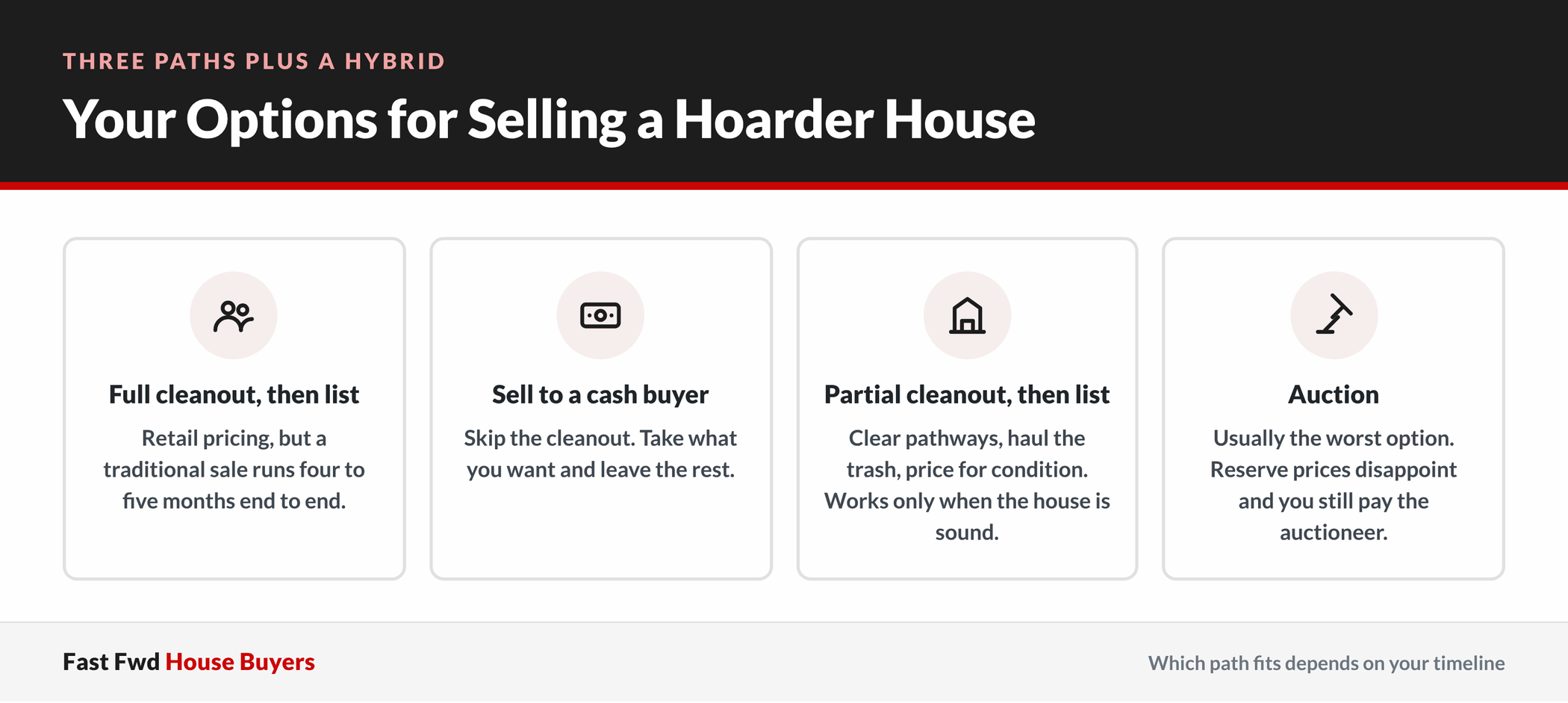
Disclosure comes with you no matter which way you go, and there are really three ways to go, plus a hybrid that people tend to skip.
A full cleanout followed by an MLS listing gets you retail pricing. Statewide, median days on market hit 71 in October 2026, up from 69 in September, and that counts listing time alone. Add the closing, and a traditional sale takes four to five months from start to finish.
Selling to a cash buyer or a local investor lets you skip the cleanout entirely.
The hybrid goes like this: a partial cleanout, then a listing. You open up pathways, haul out the obvious trash, leave the garage packed and price for condition. I think it works better than many agents admit, though only when the house itself is sound. Some owners skip the agent entirely, and our guide on how to sell your house by owner in North Carolina covers that route.
Auction is the third choice, and usually the weakest one. Reserve prices on rough houses in smaller North Carolina markets tend to disappoint, and the auctioneer still gets paid.
Which way fits you depends less on the hoarder house and more on your timeline. An heir in Asheville with a mortgage still drafting every month runs different math than a daughter in Greenville who owns the place free and clear. One of them can afford to wait out a long listing. The other can’t.
Families I work with often spend six weeks deciding and then miss the season. If you’re going to list, list in spring. Sell direct, and the calendar barely matters.
Can You Sell a Hoarder House As-is in North Carolina?
A woman in Concord called me after her second listing agent walked away. Yes, you can sell as-is here, and plenty of North Carolina owners do it every year.
What “as-is” won’t do is erase disclosure. In a hoarder house, anything you’ve actually seen under the clutter, like mold, pest damage or a leak, still belongs on the form. Writing “as-is” on the state disclosure statement doesn’t make the sale as-is on its own; the sale contract sets the condition the house is delivered in.
That form does give you a real choice. G.S. 47E-4 lets an owner either disclose what they actually know or state that they make no representations about the home’s characteristics and condition. Heirs who never lived in the house tend to pick the “no representation” route, and the statute allows it. That fits a hoarder house where the piles kept anyone from seeing the floors, walls or crawlspace. You can read the section yourself on the North Carolina General Assembly’s site.
Don’t let that paperwork slide to the back burner. The state form tells owners to hand the completed statement to the buyer no later than the time the buyer makes an offer. You’ll find the current version, form REC 4.22, on the North Carolina Real Estate Commission’s website.
Sellers of a hoarder house get sloppy on one point: they figure a cash buyer waives all of it. A legitimate buyer will still ask for the form.
Pre-1978 houses add a federal rule too. Sellers of homes from that era have to give buyers a lead-based paint disclosure form, and that covers a big share of the older housing in places like Winston-Salem and Wilmington.
What Does It Take to Prepare a Hoarder House for Sale in North Carolina?
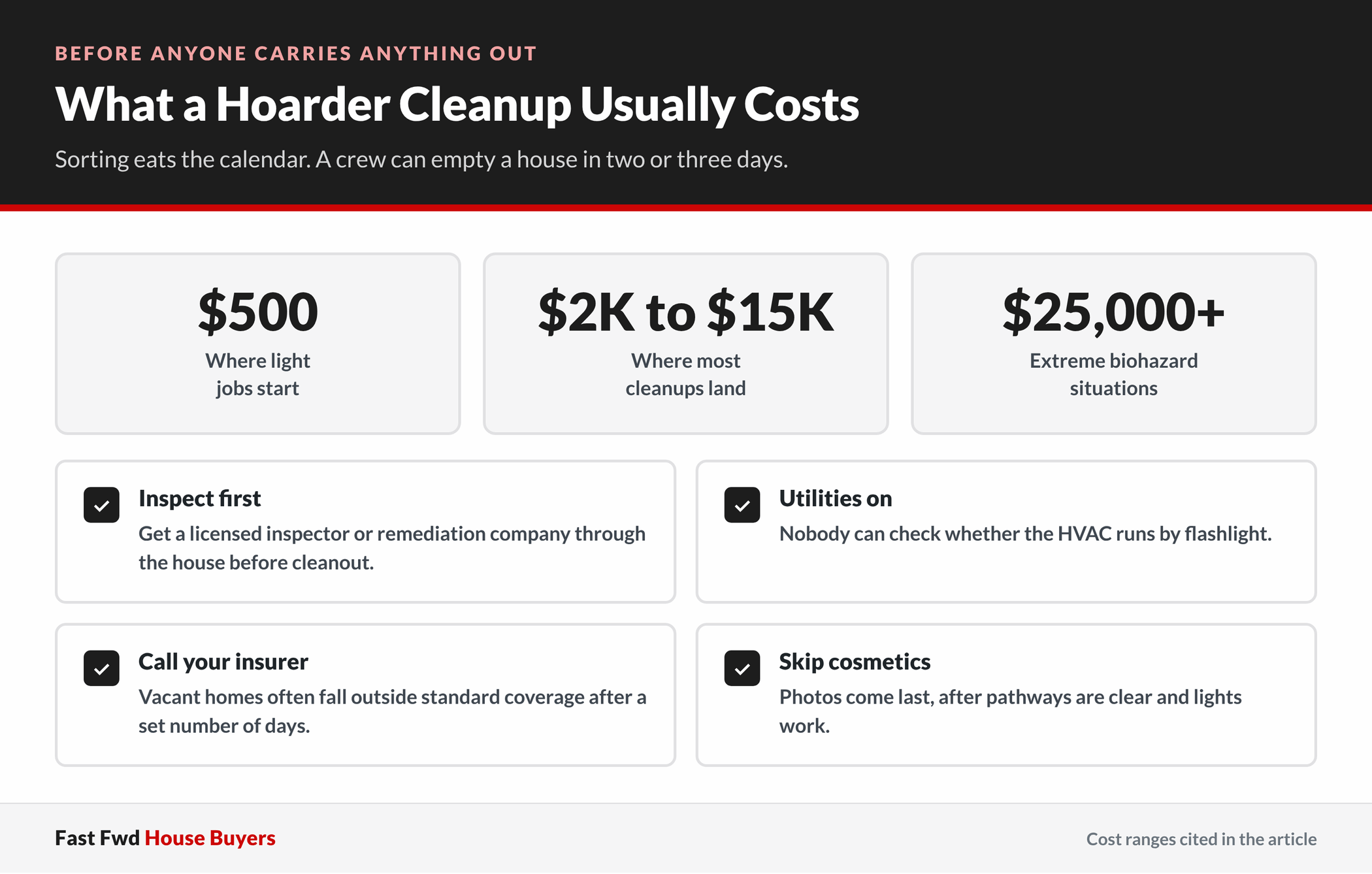
Begin with the number that drives every other decision. Most hoarding cleanups land between $2,000 and $15,000, with light jobs starting near $500 and extreme biohazard situations reaching $25,000 or more. A 1,400-square-foot ranch in Kannapolis with three rooms packed floor to ceiling falls right in the middle of that spread.
Sorting eats the calendar, not hauling. A crew can empty a house in two or three days.
Before anyone carries a single bag out, have a licensed inspector or remediation company go through the house. Mold, rodent droppings and chemicals under the sinks all change the plan.
Keep the utilities on. Half the hoarder house walkthroughs I’ve done happened by flashlight because the power got cut six months earlier, and nobody could tell whether the HVAC worked.
What should you skip? Cosmetic work.
Insurance is worth a phone call. Vacant homes often fall outside standard coverage after a set number of days, and a fire in an empty hoarder house isn’t a far-fetched risk. Your carrier can tell you exactly where your policy stands.
Photos come last, once the pathways are clear and the lights work.
How Do You Price a Hoarder House in North Carolina?
“My neighbor got $410,000, so mine’s worth about that.” Maybe.
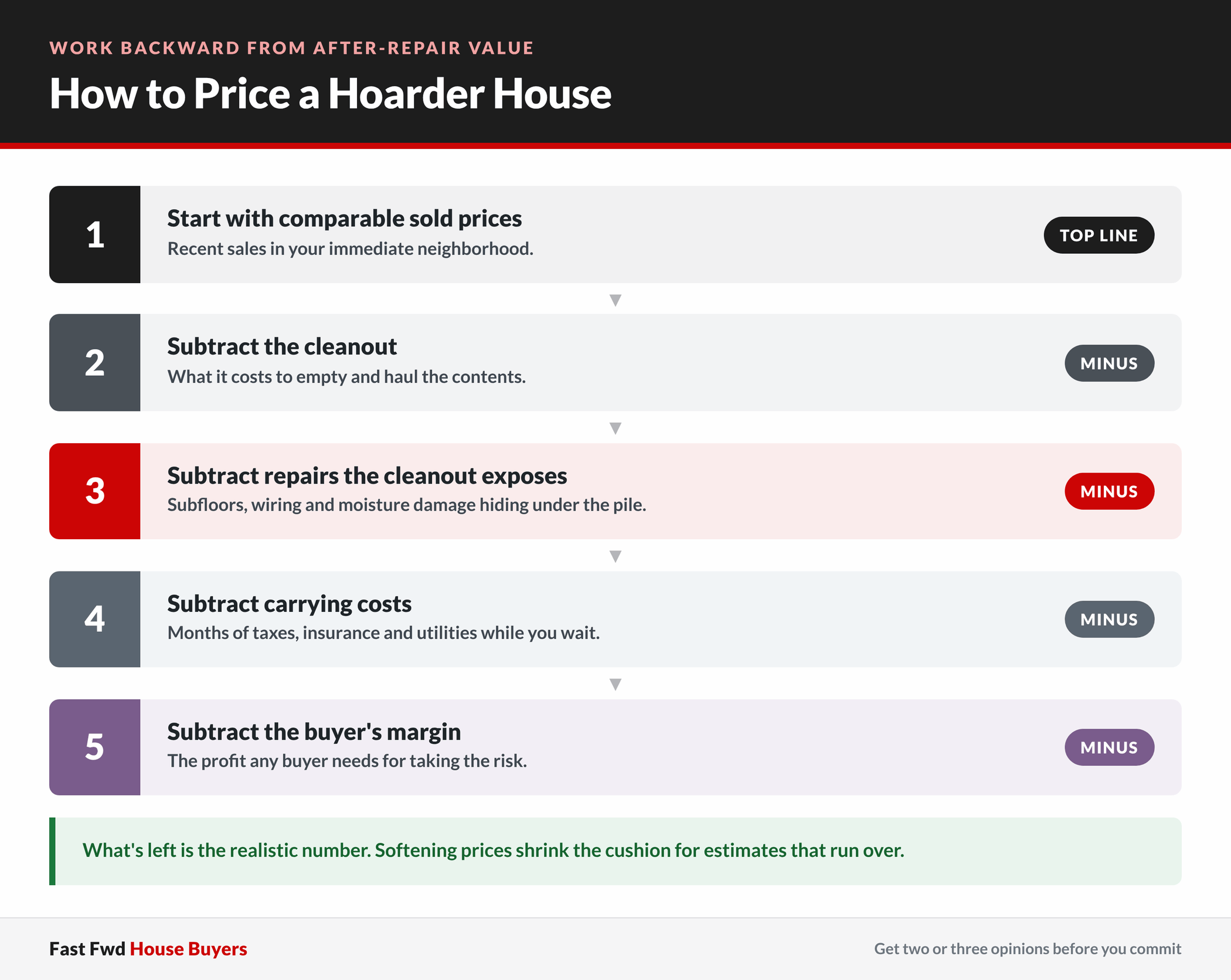
Pricing a hoarder house in North Carolina works backward from after-repair value. Take comparable sold prices in your immediate neighborhood and subtract the cleanout. Then subtract the repairs the cleanout will expose, your carrying costs and the margin any buyer needs for taking on the risk. Whatever’s left is the realistic number.
Market context sets the top of that equation. The statewide median listing price was $399,900 in October 2026, slipping from $400,000 in September, per Federal Reserve Economic Data. A buyer in one county can see a very different picture than a buyer two counties over. Around Fayetteville, Longleaf Pine REALTORS® reported a $299,995 median sales price for September 2026, with homes averaging 65 days on market.
Softer prices change your discount. When values climb fast, a buyer can absorb a repair estimate that runs over. In a flat or falling market that cushion disappears, and offers on rough houses tighten to match.
I’ve watched sellers list a hoarder house at full retail, sit ninety days, cut the price twice and finally take less than the first cash offer they turned down.
Get two or three opinions before you commit. A local real estate agent who’s handled estate sales, a cleanout contractor and a direct buyer will each read the risk differently. The spread between their numbers shows you how much risk your house really holds. Fast Fwd House Buyers will walk a house and give you a figure without asking you to clean anything first, so you’ll at least have a floor to measure other offers against.
Will Cash Buyers Buy a Hoarder House in North Carolina?
Choose the wrong buyer and you lose six weeks, then start over with a house that now looks shopworn to everyone watching.
Yes, cash buyers take on hoarder houses across North Carolina all the time.
Ask three questions before signing anything. Do you have proof of funds? Have you closed on a hoarder house before? Will you assign this contract to someone else?
That last answer tells real buyers apart from middlemen. Assignment isn’t automatically bad, though you deserve to know which kind of buyer you’ve got before your closing date rides on it.
Real cash buyers handle the cleanout themselves. You take what you want, leave the rest, and walk away from the Christmas decorations and forty years of magazines in the garage.
Closings move quickly on this path. Title work on a North Carolina home generally takes one to three weeks once a buyer orders it, as long as there’s no probate snag and no surprise lien. Estates take longer, and that’s a clerk of court matter, not a buyer problem.
Be wary of a buyer who wants an inspection contingency on an as-is sale. Anyone buying a hoarder house in that shape should already know their own risk tolerance. Renegotiating after inspection is the most common way a cash sale ends up worse than the offer you accepted.
What Is the Fastest Way to Sell a Hoarder House in North Carolina?
Monday morning, a seller in Monroe had a packed three-bedroom and no idea where to begin. Seventeen days later she sat at a closing table with a check, and she hadn’t moved a single box.
A direct sale is the fastest route there is, and it isn’t close. For comparison, Redfin reported that Durham listings took a median 31 days to go under contract in May 2026, a week slower than a year earlier. Stack contract-to-close time on top of that, and the usual path runs a few times longer than a direct sale.
Speed comes from cutting steps. What’s left is a title search, the disclosure paperwork and a closing attorney.
North Carolina closings run through attorneys, not title companies. That’s handy to know if you’ve sold in another state before. Your closing attorney orders the title search and handles the payoff, so delays usually trace back to unsettled heirship or an old judgment nobody knew about.
Pull your deed and check for liens before you even take offers. Contractor liens, Medicaid estate recovery claims and unpaid property taxes all show up at closing. Catch them early and you’re looking at a two-week close, not a two-month one.
Does fast mean cheap? It means a discount, and that isn’t the same thing. You’re trading a slice of retail value to drop cleanout costs, months of utility and tax bills, agent commissions and the real chance the house gets worse while you wait. Run that math honestly and the gap usually shrinks.
Who Can Help You Sell a Hoarder House in North Carolina?
Call a few agents about a packed house and the talk sounds hopeful right up until someone asks when it’ll be show-ready. Agents who’ve done estate work will stick with you. The rest stop calling back, because a hoarder house doesn’t photograph, doesn’t appraise and doesn’t close on their usual timeline.
Build a small team instead. A real estate attorney matters more here than in a normal sale. It counts most when probate, more than one heir or an old survivorship deed is in the mix. Many North Carolina closing attorneys will answer a short question about your situation before you hire anyone.
Senior service groups around the state work with hoarding disorder, and I’ve seen families skip this step and regret it. Area agencies on aging in places like Greensboro and Fayetteville can put you in touch with social workers. They know that forcing a cleanout on a parent with a mental health condition tends to backfire. If your parent still lives in the house, call them before you call for a dumpster.
Licensed remediation contractors cover the biohazard side.
Direct buyers round out the team. Fast Fwd House Buyers works with North Carolina sellers in exactly this spot, and the useful part is getting a condition-based number early, before you’ve spent money you can’t get back.
An owner outside Statesville reached out to me after four years of renting a house he’d inherited from an aunt. His last tenant left the back bedroom stacked to the window with boxes. He told me he’d never wanted to be a landlord in the first place; he just hadn’t known what else to do with the place.
Frequently Asked Questions About Selling a Hoarder House in North Carolina
What Exactly Counts as a Hoarding Home?
A hoarding home is one where stuff has taken over the living space so far that rooms can’t be used the way they’re meant to be. Clutter alone doesn’t qualify; blocked doorways, utilities you can’t reach and beds buried under piles are the signs professionals look for. Hoarding is a diagnosed mental disorder, not a cleaning problem, and that difference matters when a family member still lives there.
Do I Have to Tell Buyers About Mold or Pests in a Hoarder House?
You have to disclose what you know firsthand, or choose the no-representation option the state form allows, as covered above. If you know about an infestation or you’ve seen mold, don’t guess at how bad it is and don’t tuck it into a comment field. Hiding a known defect is how a clean closing turns into a lawsuit later.
Can I Sell a Hoarder House in North Carolina If It’s Still in Probate?
Often, yes, though it depends on how the estate is set up and whether the will gives the executor power of sale. The clerk of superior court in the county where the property sits oversees the estate, and your attorney can tell you whether a court order is needed before a contract gets signed. Plan for extra weeks, because probate timing is the single most common reason a hoarder house closing slips.
Will a Bank Finance a Buyer for a Hoarder House Here?
A regular loan can work on a lightly cluttered home that passes appraisal, though government-backed loans rarely do when safety hazards or debris block access to major systems. Renovation loans exist and some buyers use them, but they add inspection steps and time. That’s why most of these properties sell for cash.
How Much Less Will I Get Selling a Hoarder House As-is?
The discount reflects what a buyer will have to spend plus the risk they’re taking on, so nobody can honestly give you a percentage sight unseen. Compare any offer to what you’d net after cleanout, repairs and commissions. Then add a few more months of taxes, insurance and power bills. For plenty of sellers, the two numbers end up within shouting distance of each other.
Should I Clean Out a Hoarder House Before Getting Offers?
I’d say no, at least not until you know what the house is worth both ways. Clearing it out can expose damage that lowers the value, and you can’t get cleanout money back. Get a condition-based offer first, then decide whether cleaning up is worth the difference.
Selling a Packed House in the Charlotte Area
The Mecklenburg County market is cooling off as well. Median days on market there reached 64 in October 2026, up from 43 in April, according to Realtor.com data on FRED.
A hoarder house usually sits longer than that, which is why many families across our North Carolina service area start with a condition-based number.
Ready to Talk Through Your Options?
If you’re sitting on a hoarder house in North Carolina and aren’t sure which way to go, we’re happy to look at it with you and give you straight numbers. There’s no cleanup required, no pressure and no obligation to act on anything we tell you. Whenever you’re ready, contact Fast Fwd House Buyers or fill out the short form below.